

Navigating the landscape of NDIS supported living services can be overwhelming for many individuals and families. This comprehensive guide aims to clarify the various options available under the National Disability Insurance Scheme (NDIS), focusing on how these services empower participants to achieve greater independence. Understanding the nuances of supported independent living (SIL) and other accommodation options is crucial for making informed decisions that align with personal needs and goals. Many people struggle with finding the right support that not only meets their daily living requirements but also enhances their quality of life. This article will explore the key features of NDIS supported living services, eligibility criteria, and the application process, providing a roadmap for better choices in independent living. We will cover essential topics such as the types of accommodation available, the role of support coordinators, and how to select the right home and living supports tailored to individual needs.
What is NDIS Supported Independent Living and How Does It Empower Participants?
NDIS Supported Independent Living (SIL) is a service designed to assist individuals with disabilities in living as independently as possible while receiving the necessary support. This service empowers participants by providing tailored assistance that enhances their daily living skills, promotes social inclusion, and fosters a sense of community. The primary goal of SIL is to enable individuals to manage their daily routines effectively, ensuring they can live fulfilling lives with the support they need.
The concept of independent living, central to NDIS services, has historical roots in broader movements advocating for self-determination and autonomy for people with disabilities.
NDIS & Independent Living Movement
the independent living movement (ILM) and the neoliberal ‘new right’. The new right supported independent living. However, only some have ‘active participation in everyday life as an
A disabling ideology: challenging the neoliberal co-optation of independent living under the NDIS, 2019
What Services and Daily Supports Does SIL Include?
SIL encompasses a variety of services aimed at enhancing daily living. These services typically include:
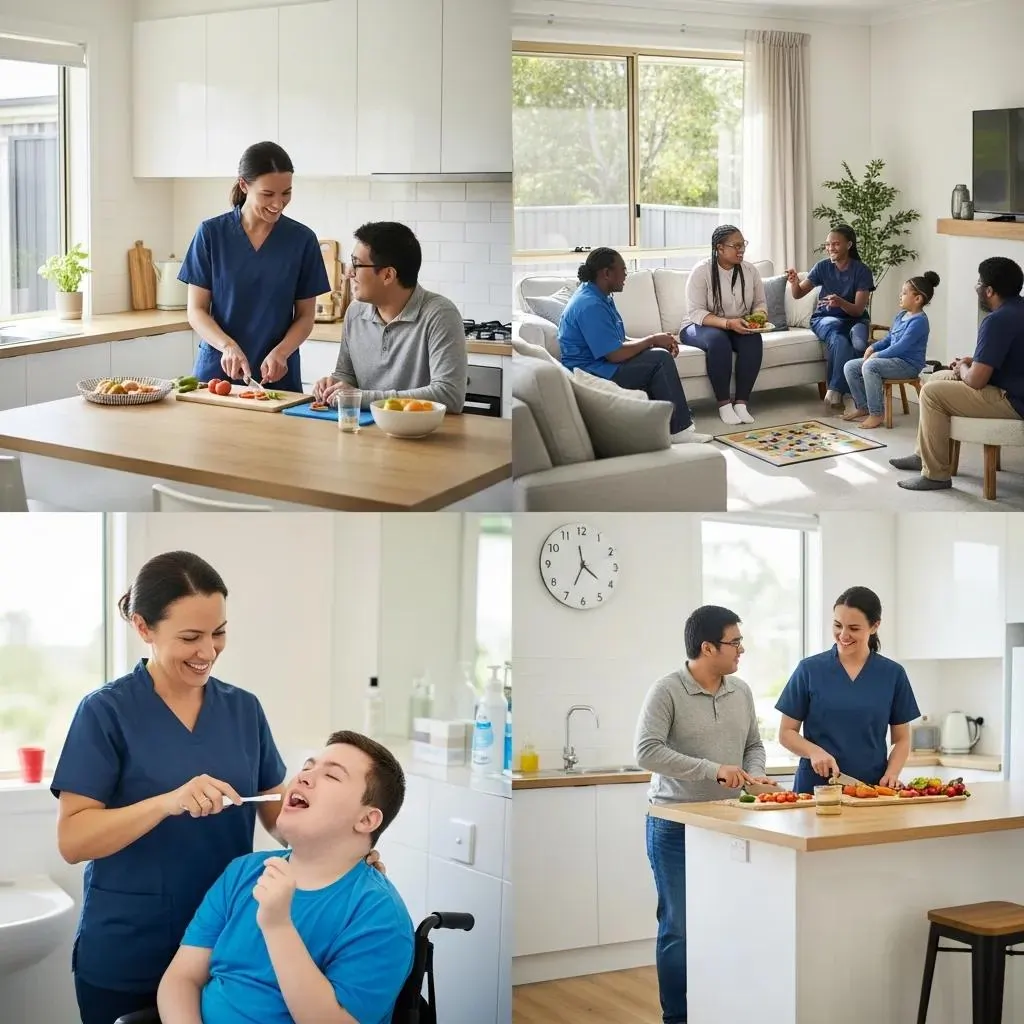
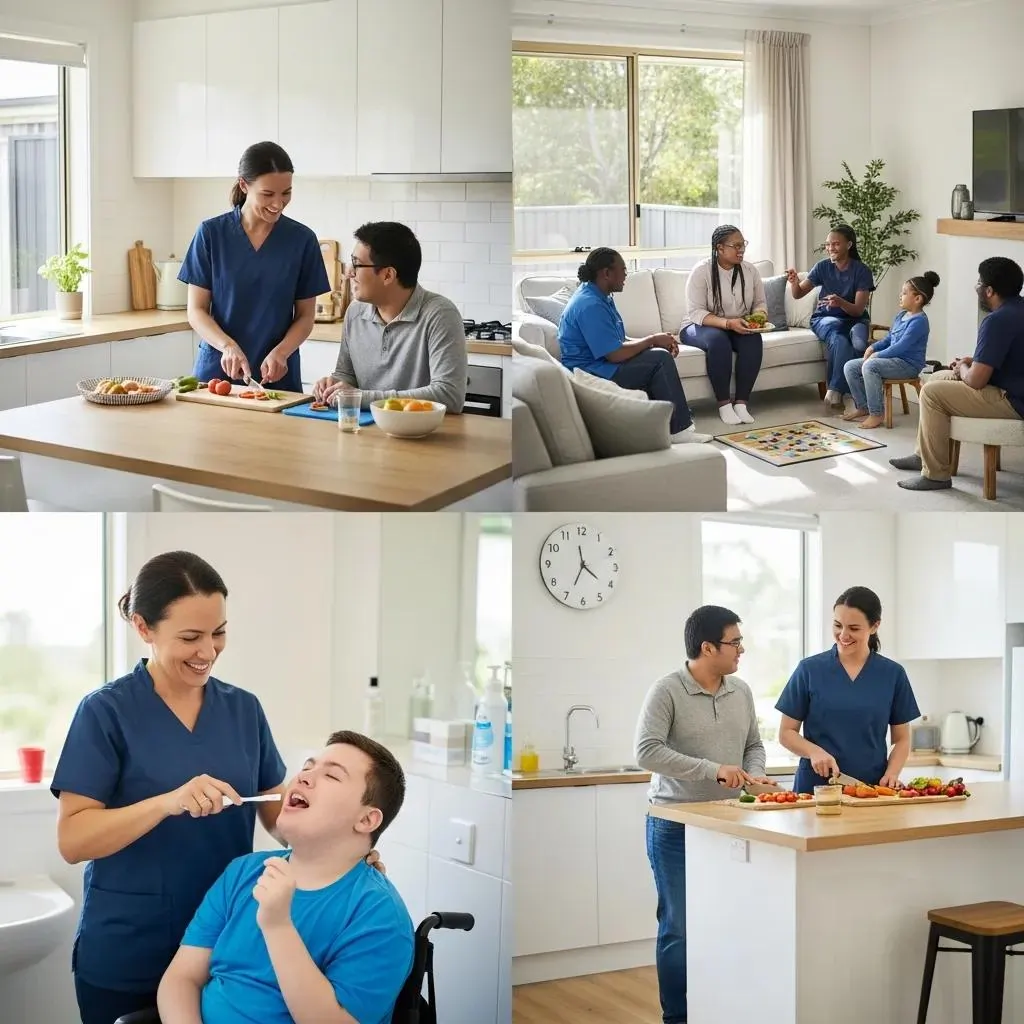
- Personal Care: Assistance with daily activities such as bathing, dressing, and grooming.
- Meal Preparation: Support in planning and preparing nutritious meals tailored to individual dietary needs.
- Household Management: Help with cleaning, laundry, and other household tasks to maintain a safe living environment.
- Social Support: Opportunities for social engagement and community participation, fostering connections with others.
These daily supports are crucial for individuals seeking to enhance their independence while ensuring their specific needs are met.
The effectiveness of these supports is often highlighted by participants who experience tailored assistance, enabling them to live more independently.
NDIS Individualised Support for Independent Living
to cover the costs of approved supports (NDIS 2021). Now I get 1:1 support 3 days a week and 1 day at (workplace). Participants living independently or in supported independent living
The Relationship Between Personal Wellbeing,
Choice and NDIS Individualised Planning and Support for People With Intellectual Disabilities, T Parmenter, 2021
Who is Eligible for NDIS SIL and How is Funding Determined?
Eligibility for NDIS SIL is primarily based on the individual’s disability and their need for support in daily living activities. To qualify, participants must have a permanent and significant disability that affects their ability to perform daily tasks independently.
Funding for SIL is determined through the NDIS planning process, where participants work with their support coordinators or planners to assess their needs and goals. This assessment helps to establish the level of funding required to access appropriate services and supports.
What Are the Key NDIS Accommodation Options: SIL, SDA, STA, and ILO?
The NDIS offers several accommodation options to cater to the diverse needs of participants. Understanding these options is essential for making informed decisions about living arrangements.
- Supported Independent Living (SIL): As previously discussed, SIL provides support for individuals to live independently while receiving assistance with daily tasks.
- Specialist Disability Accommodation (SDA): SDA is designed for individuals with extreme functional impairment or very high support needs, offering purpose-built housing solutions that cater to specific requirements.
- Short Term Accommodation (STA): STA provides temporary support for individuals who may need respite or short-term care, allowing them to stay in a supportive environment while their usual caregivers take a break.
- Individualised Living Options (ILO): ILO offers flexible living arrangements tailored to the participant’s preferences and support needs, providing an alternative to traditional SIL or SDA arrangements.
How Does Specialist Disability Accommodation Differ from SIL?
Specialist Disability Accommodation (SDA) differs from SIL in that SDA is specifically designed for individuals with high support needs who require specialised housing solutions. While SIL focuses on providing support within a shared or individual living environment, SDA offers purpose-built accommodations that cater to the unique needs of individuals with significant disabilities. This distinction is crucial for participants to understand when considering their living options.
What Are Short Term Accommodation and Individualised Living Options and Their Benefits?
Short Term Accommodation (STA) and Individualised Living Options (ILO) serve different purposes but both provide essential support for individuals with disabilities. STA is beneficial for those needing temporary care, allowing them to experience a change of environment while receiving necessary support. ILO, on the other hand, provides flexible housing arrangements that enable participants to choose their living situation and supports, promoting greater autonomy and control. Both options are vital for ensuring that individuals have access to the care and living arrangements that best suit their needs.
How to Navigate the NDIS Supported Living Application Process Effectively?
Navigating the NDIS application process can be complex, but understanding the steps involved can simplify the experience for participants and their families.
What Role Does a Support Coordinator Play in the Application?
A support coordinator plays a crucial role in the NDIS application process by assisting participants in understanding their options and navigating the system. They help individuals identify their needs, set goals, and develop a plan that outlines the supports required to achieve those goals. This guidance is invaluable in ensuring that participants receive the appropriate funding and services tailored to their unique circumstances.
What Are the Step-by-Step Requirements for Applying?
To apply for NDIS supported living services, follow these steps:
- Contact NDIS: Reach out to the NDIS to express your interest in applying for support.
- Gather Documentation: Collect necessary documents, including medical reports and evidence of disability.
- Complete the Access Request: Submit an access request form to determine eligibility for the NDIS.
- Attend a Planning Meeting: Participate in a meeting with an NDIS planner to discuss your application and support needs.
- Receive Your Plan: Once approved, you will receive your NDIS plan outlining the supports and funding allocated to you.
This structured approach ensures that participants are well-prepared and informed throughout the application process.
How to Choose the Right NDIS Home and Living Support for Your Needs?
Selecting the appropriate NDIS home and living supports is essential for ensuring that individual needs are met effectively. Participants should consider several factors when making this decision.
What Factors Should Participants Consider When Comparing SIL and SDA?
When comparing Supported Independent Living (SIL) and Specialist Disability Accommodation (SDA), participants should evaluate their specific needs, including the level of support required, the type of living environment preferred, and any accessibility requirements. Additionally, considering the location and community resources available can significantly impact the overall quality of life.
How Do Individualised Living Options Offer Flexible Housing Solutions?
Individualised Living Options (ILO) provide a flexible approach to housing, allowing participants to choose their living arrangements based on personal preferences and support needs. This model promotes greater autonomy and control over one’s living situation, enabling individuals to create a home environment that aligns with their lifestyle and goals. ILOs can include shared living arrangements, independent living, or a combination of both, tailored to the unique needs of each participant.
Research consistently shows that participants prioritise domains like home, daily living, and choice and control, underscoring the importance of flexible and person-centered support models.
NDIS Participant Priorities: Home, Daily Living & Choice
Our sample consisted of 1140 NDIS participants. While the majority ranked the domains as equally important, answers from the rating module suggested otherwise. Adjustments for these differences lead to similar results with both age cohorts ranking Health & Wellbeing, Home and Daily living as the most important domains. These were followed by Relationships, Choice & control, Social, Community & Civic participation, Lifelong learning, and Work for younger people. For older people the importance order between the Choice & control and Relationships was switched.
The relative importance of key life domains for people with disability: findings from a cross-sectional survey of NDIS participants in Australia, S Badji, 2025
What Funding and Eligibility Criteria Govern NDIS Disability Housing Supports?
Understanding the funding and eligibility criteria for NDIS disability housing supports is crucial for participants seeking assistance.
How is Funding Allocated Across Different Supported Living Services?
Funding for NDIS supported living services is allocated based on individual needs assessments conducted during the planning process. This assessment considers the level of support required, the type of accommodation chosen, and any additional services needed to enhance the participant’s quality of life. The NDIS aims to provide sufficient funding to ensure that participants can access the support necessary for their independence.
What Are the Eligibility Requirements for Various NDIS Supported Living Options?
Eligibility requirements for NDIS supported living options vary depending on the type of service. Generally, participants must have a permanent and significant disability that impacts their daily living activities. Additionally, they must meet the NDIS access criteria, which includes providing evidence of their disability and demonstrating the need for support. Understanding these requirements is essential for ensuring a smooth application process.
Where Can You Access NDIS Supported Living Services in Sydney, Canberra, and Central Coast?
You can access NDIS Supported Living Services in the following locations:
- Sydney, NSW: 6 Marco Ave, Revesby NSW 2212
- Canberra, ACT: Suite 146 M Centre, 11 Palmerston Lane, Manuka ACT 2603
- Central Coast, NSW: Unit 6, 79-81 Hutton Road, The Entrance North, NSW 2261
What Supported Living Services Does Ability to Achieve Provide in These Regions?
Ability to Achieve offers a range of disability support services across Sydney, Canberra, and the Central Coast. These services include SIL, SDA, and various allied health supports tailored to meet the unique needs of individuals with disabilities. The organisation is committed to empowering participants through personalised support and community engagement.
How Do Local Success Stories Illustrate the Benefits of Supported Living?
Local success stories highlight the transformative impact of supported living services on individuals’ lives. Many participants have reported increased independence, improved social connections, and enhanced overall well-being as a result of accessing NDIS support. These real-life examples serve as powerful testimonials to the effectiveness of supported living services in fostering a more inclusive and supportive community for individuals with disabilities.