
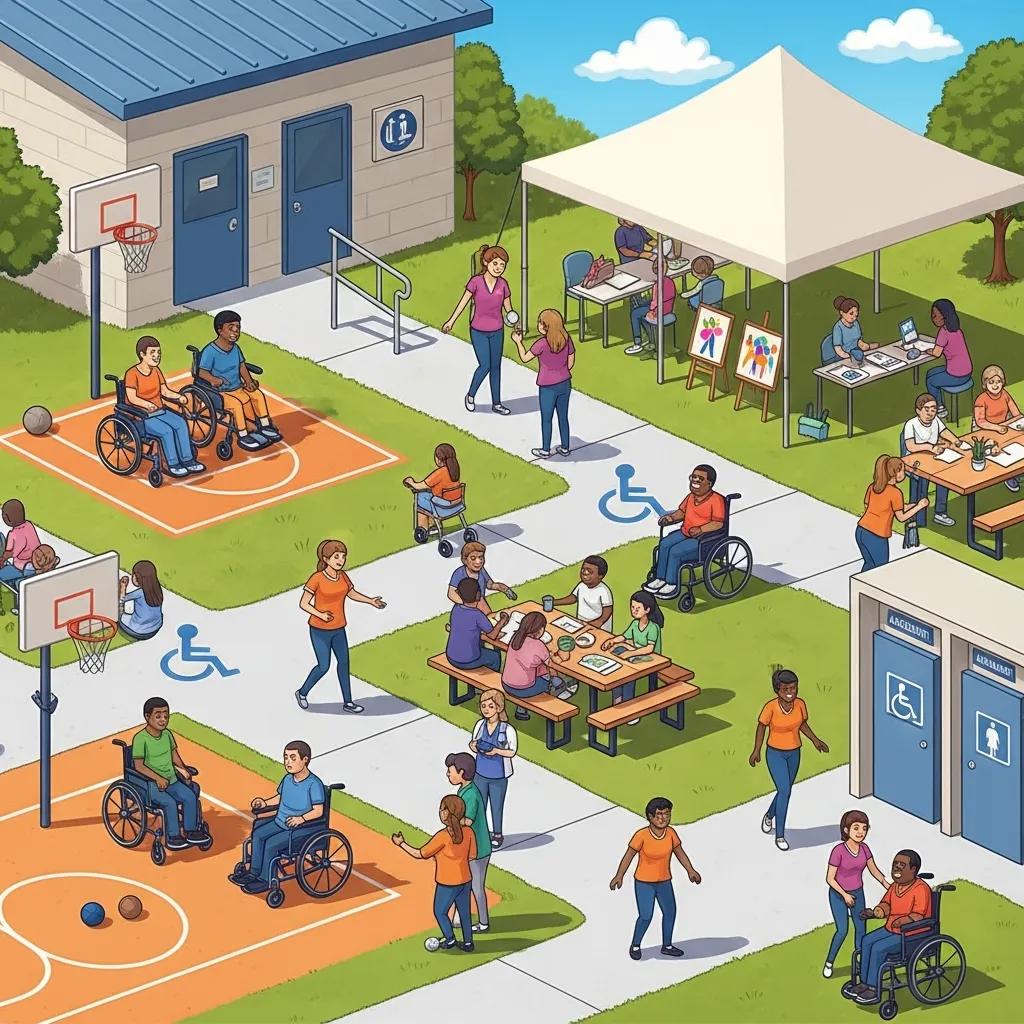
Community access programs for disabled individuals are structured supports that enable people to take part in everyday community life, build practical skills and form social connections that matter. This guide explains what community access programs are, how they promote disability social inclusion, and how NDIS funding can be used to support participation goals. Many participants and families seek clear, practical steps to translate plan goals into meaningful activities, reduce isolation and work toward independent living outcomes; this article addresses those needs with actionable guidance. You will find definitions, funding mappings, measurable benefits, typical activity types, selection criteria for providers in Australia, and explanations of how participation builds independence. The sections include short EAV tables and bulleted lists to aid scanning and to target featured snippets around “community access programs for disabled individuals”, “NDIS community participation”, and “community participation services”. Throughout, related entities such as the NDIS, support coordination, allied health and supported independent living (SIL) are woven into practical advice for participants and families.
What Are Community Access Programs and How Do They Support Disability Social Inclusion?
Community access programs are coordinated support services designed to help disabled people participate in social, recreational, educational and civic activities in their local community. They work by combining planning, support-worker facilitation, transport and risk management to remove barriers to participation and promote belonging. The direct benefit is increased social inclusion, measurable improvements in wellbeing, and opportunities to practise independence skills in real-world settings. Understanding these core functions clarifies how community access differs from other supports like SIL or allied health, and prepares readers for practical choices about activities and providers.
Defining Community Access Programs for Disabled Individuals
Community access programs typically support NDIS participants, families and carers by delivering goal-focused sessions in group or one-to-one formats either out-of-home or within community venues. Providers design sessions around participant goals such as building friendships, accessing local classes, or volunteering, while embedding safety and transport arrangements. Delivery modes often include small group outings, activity-based clubs, structured workshops and supported attendance at mainstream community events, each tailored to individual preferences and functional needs. This operational clarity helps match supports to outcomes and introduces the planning steps discussed in the next section.
Key Goals and Components of Community Participation Services
Community participation services aim to promote social connection, practical skill development and greater independence through structured support and community involvement. Core operational components include activity planning, transport coordination, support-worker facilitation and individualised risk and behaviour support plans. Measured outcomes commonly use goal-based progress tracking, participation frequency and qualitative wellbeing reports to demonstrate impact. These components work together to move participants from supported experiences toward more independent community engagement, which the next section explores in relation to funding.
The primary goals and components of community participation services include:
- Social connection and belonging: Facilitated group activities and peer networks reduce isolation.
- Skill-building for daily life: Activities scaffold transport, communication and budgeting skills.
- Safety and inclusion mechanisms: Risk plans and trained staff enable accessible participation.
This checklist clarifies what to expect from a quality community access program and provides criteria to compare providers in later sections.
How Does the NDIS Fund Community Access Support for Disabled Participants?
NDIS funding supports community access primarily through categories that cover social and community participation and, where relevant, capacity-building for participation skills. The scheme allows participants to allocate funds toward supports that directly help them achieve participation goals, in line with documented plan objectives and NDIA guidance. Understanding which plan categories apply, and how to document goals and service agreements, is essential for using funds effectively and for sourcing appropriate providers. The following table maps common NDIS plan categories to the types of community access they can typically fund, providing a practical reference for participants and plan managers.
Indeed, research consistently shows that social and community participation are among the top priorities for NDIS participants.
NDIS Participant Priorities: Social & Community Participation
This study investigates the relative importance for people with disability of key life domains and whether this differs between young people (15–24) and adults (25 and over). A cross-sectional survey was conducted from 20 October to 31 December 2022 with National Disability Insurance Scheme (NDIS) participants asked to rank eight domains: Choice & control, Daily living, Relationships, Home, Health & wellbeing, Lifelong learning, Work, Social, Community and Civic participation.
The relative importance of key life domains for people with disability: findings from a cross-sectional survey of NDIS participants in Australia, S Badji, 2025
Overview of NDIS Funding Categories Relevant to Community Participation
The NDIS recognises several budget streams relevant to community participation, with Core budgets commonly funding regular attendance at social clubs and community activities, and capacity-building budgets supporting skill development that increases autonomy. Providers should align service proposals with stated plan goals to ensure funding clarity, and participants can use plan management options to streamline payments. Documentation such as service agreements and clear goal descriptions is often required by plan reviewers to justify ongoing support. Understanding these distinctions enables participants to plan activities that both meet immediate participation needs and contribute to long-term independence.
How to Use NDIS Plans to Access Community Integration Services
To use an NDIS plan for community integration, start by setting specific, measurable community participation goals during planning or plan review discussions. Next, identify providers who can deliver the desired support, agree on frequency and supervision levels in a service agreement, and confirm the plan category to be charged for the service. Participants may choose self-managed, plan-managed or NDIA-managed payment options; each requires different administrative steps to claim services. Keeping simple progress records and linking activity outcomes to plan goals helps secure continued funding during plan reviews and demonstrates the value of community access interventions.
What Are the Benefits of Community Integration for Disabled Individuals?
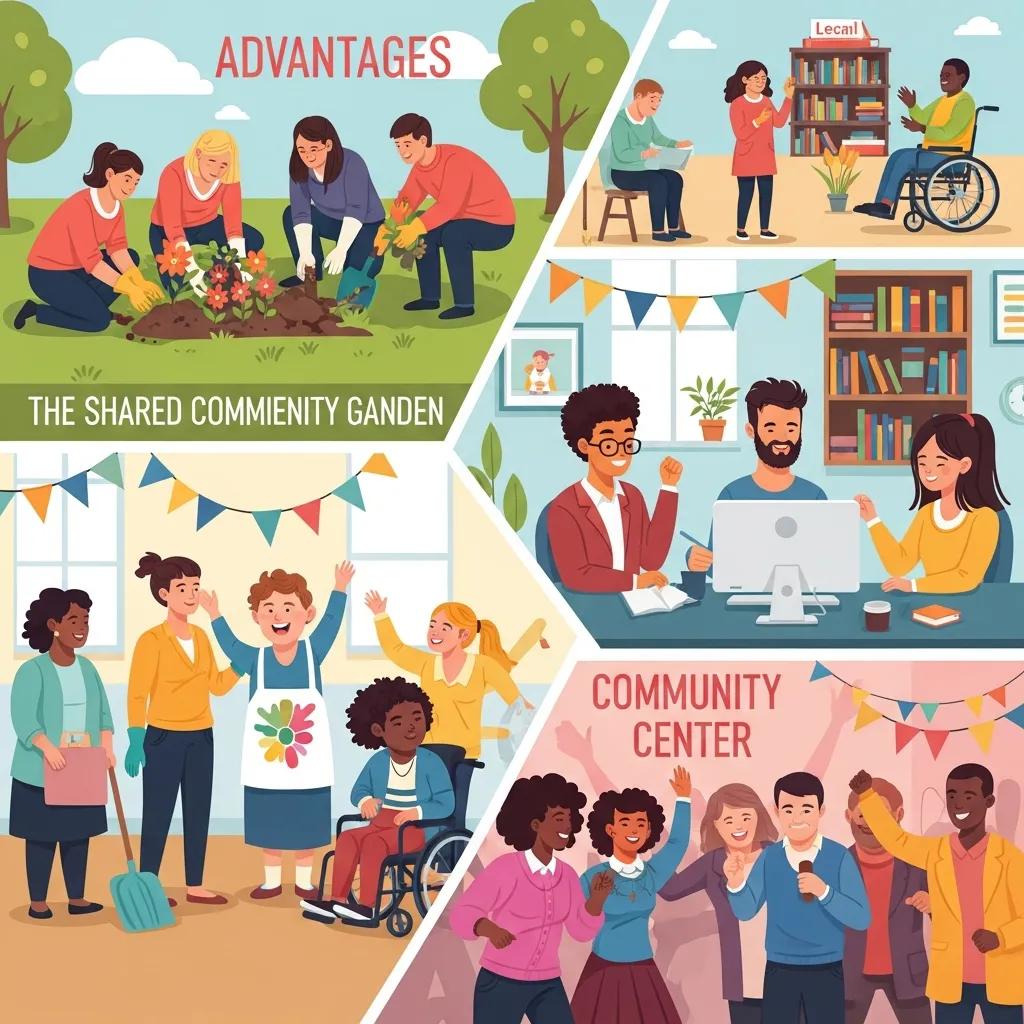
Community integration delivers social, emotional and practical outcomes that extend beyond single activities to produce measurable life improvements. Participation reduces isolation, strengthens mental health, builds transferable skills and can open pathways to employment or further education. These mechanisms operate through repeated, supported engagement that reinforces confidence, routine and capability.
Social and Emotional Advantages of Disability Community Participation
Engaging in community activities reduces isolation by creating regular opportunities for social contact, peer support and shared purpose, which in turn supports mental health and a sense of belonging. The mechanism relies on consistent, supported interactions that help participants form reciprocal relationships and reduce stigma associated with disability. Evidence from contemporary research highlights links between social participation and lower rates of depression and improved subjective wellbeing among disabled Australians. These social gains also create a foundation for skill development, as confidence derived from friendships supports willingness to try new tasks in community settings.
Skill Development and Independent Living Outcomes Through Community Access
Community access activities provide practical training in everyday tasks such as using public transport, managing money, following social routines and communicating needs in public. Staff scaffold learning through repeated practice, prompting and fading supports as competence grows, enabling participants to generalise skills across settings. For example, regular supported attendance at a community course can progress to independent travel to the venue, demonstrating a measurable step toward independence. Tracking these milestones within NDIS plans helps participants evidence progress for future plan reviews and potential transitions to supports like SIL when appropriate.
These programs are particularly vital for fostering essential life skills and social integration, especially for younger individuals with intellectual and developmental disabilities.
Which Types of Community Access Activities and Social Clubs Are Available?
Community access covers a broad range of activities that can be tailored to individual interests, abilities and goals, including sports, creative arts, volunteering and education. Programs usually consider accessibility adaptations, support-worker ratios and transport needs to ensure inclusive participation. Activity selection should align with a participant’s participation goals and be documented in service agreements for transparency. The next subsection provides concrete examples across activity domains and notes common accessibility considerations.
Examples of Supported Activities: Sports, Arts, Volunteering, and Education
Supported activities span recreational, creative, civic and learning opportunities and often require specific accessibility adaptations or transport planning. Typical examples include adapted sports sessions with accessible equipment, community arts workshops with sensory-friendly options, volunteer placements with role adjustments, and accredited or non-accredited adult education classes with support-worker presence. Transport arrangements, behaviour support strategies and venue accessibility are commonly planned in advance to remove barriers. These activity types offer measurable outcomes such as improved fitness, creative expression, community contribution and increased qualifications or skills.
Common activity types for community access include:
- Adapted sports and recreation: Tailored physical activities that promote health and social connection.
- Arts and cultural programs: Creative workshops offering emotional expression and skill development.
- Volunteering and civic participation: Structured roles that build responsibility and community links.
These options illustrate the practical variety available and lead into an illustrative example of how a provider may deliver such programs.
How Ability to Achieve Facilitates Inclusive Community Engagement
Ability to Achieve operates as an Australian disability support provider offering person-centred Community Access and Social Club services across Sydney, Canberra and the Central Coast. Their approach focuses on tailoring activities to participant goals, coordinating transport and embedding allied health linkages where useful to support participation and early intervention objectives. By offering community access sessions and social clubs that emphasise skill-building and social inclusion, they provide concrete examples of the facilitation and planning models described earlier. This illustration helps readers see how a local provider can translate plan goals into regular community engagement.
How Can You Choose the Right Community Access Provider in Australia?
Selecting a community access provider requires attention to credentials, person-centred practice, staff training, safety measures and local availability to ensure meaningful and sustainable participation. Evaluating providers involves reviewing evidence of outcome measurement, asking about staff ratios and transport arrangements, and confirming alignment with plan goals. Practical evaluation steps include interviewing providers, requesting sample activity plans and checking how they document progress for plan reviews. The checklist below summarises core selection factors and suggested questions to ask prospective providers.
Key evaluation criteria when choosing a community access provider include:
- NDIS registration and relevant credentials: Ensure services align with plan requirements.
- Person-centred planning and evidence of outcomes: Look for tailored goals and measurable progress tracking.
- Practical considerations: Confirm transport options, scheduling flexibility and trained staff.
This checklist prepares participants and families to compare providers and select supports most likely to deliver participation outcomes.
Key Factors to Consider When Selecting a Disability Support Provider
When interviewing providers, ask about their approach to person-centred planning, staff qualifications, how they manage risk and how they demonstrate outcomes from community access. Practical questions include how they match staff to participant preferences, what transport arrangements they provide, and how they document progress against plan goals. Evidence of allied health collaboration, early intervention specialisms and mental health supports can be especially valuable for complex needs. These considerations ensure a provider can both deliver enjoyable activities and support measurable steps toward independence, as illustrated in the next subsection with a factual provider example.
Unique Services and Person-Centred Approach of Ability to Achieve
Ability to Achieve offers person-centred community access and social club services with allied health linkages and specialisms in mental health support, early diagnosis and early intervention. Operating in Sydney, Canberra and the Central Coast, the organisation emphasises tailoring sessions to individual goals and linking community participation to broader wellbeing objectives. This factual example shows how provider attributes, such as integrating allied health input and focusing on early intervention, map to the selection criteria families should prioritise. Using such real-world attributes as a template helps participants choose providers aligned to both short-term enjoyment and long-term independence goals.
How Does Community Participation Build Independent Living Skills for Disabled Individuals?
Community participation builds independent living skills by creating repeated, supported opportunities to practise daily tasks in real settings, which strengthens competence and reduces reliance on intensive support. The mechanism is experiential learning: participants try tasks with prompts, receive feedback, and gradually take on more responsibility as confidence grows. Measuring progress with clear goals and recorded milestones helps participants demonstrate gains during plan reviews and plan transitions. The final subsections detail specific life skills gained and how to document progress toward increased independence.
Practical Life Skills Gained Through Community Engagement
Community engagement fosters practical skills such as using public transport, handling money, following appointment routines and communicating with service staff, all of which contribute to everyday independence. Providers scaffold these skills using task analysis, modelling and supported practice so tasks become repeatable and transferable to new contexts. For example, repeated supported travel to a class may progress to independent travel with occasional check-ins, demonstrating a measurable skill acquisition. Documenting these skill milestones within NDIS plans helps secure ongoing funding and supports transitions to other arrangements like SIL when appropriate.
Supporting Greater Independence via NDIS Community Access Programs
NDIS-funded community access supports act as stepping-stones toward greater independence by linking funded skill-building activities to long-term goals and transitional supports. To demonstrate progress, maintain simple records such as frequency of independent actions, goal attainment reports and supporting evidence from allied health or support workers. These records are useful during plan reviews to justify continued or increased funding for capacity-building and to illustrate readiness for more independent living options. By aligning activities, documentation and review processes, community participation becomes a measurable pathway to stronger independent living outcomes.