
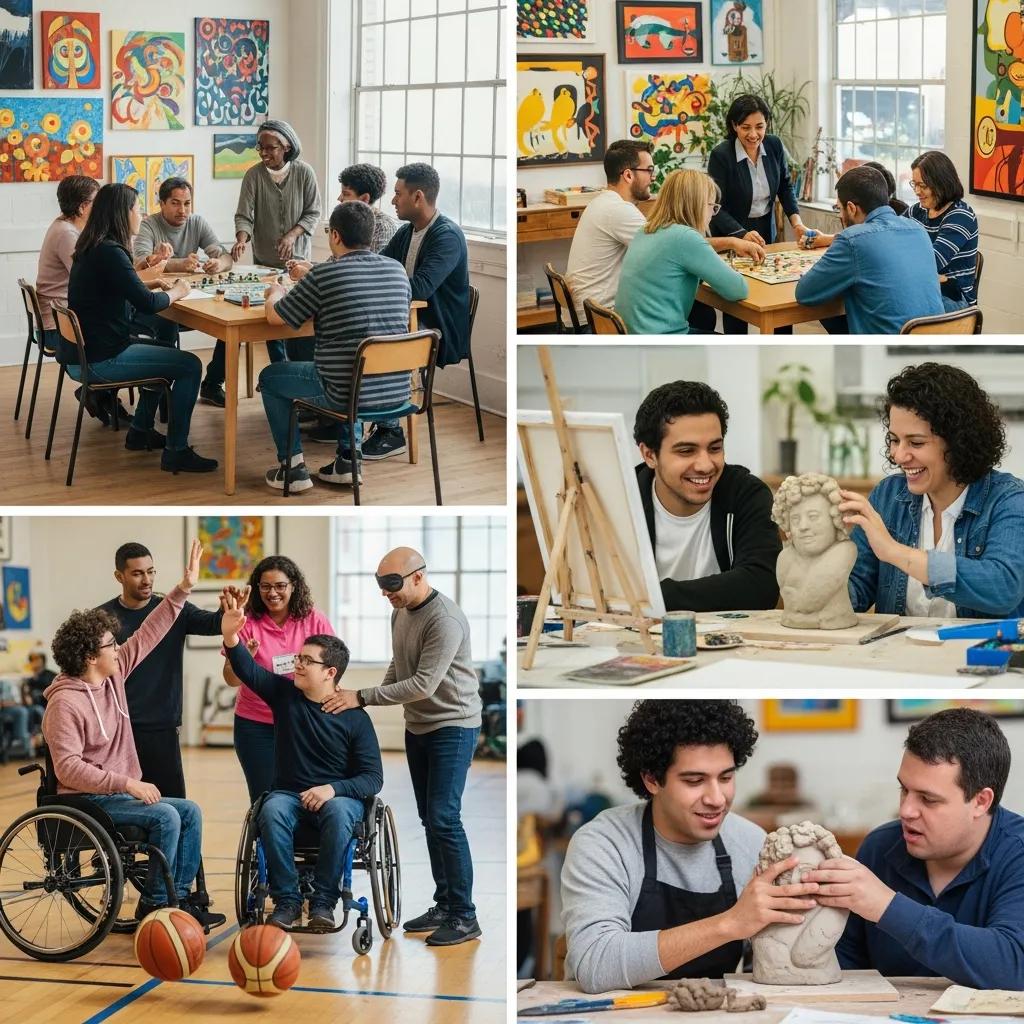

NDIS Community Access, often called community participation, enables participants to take part in social, recreational and community activities that build skills, independence and social connection. This guide explains what community participation covers, why it matters for wellbeing and independence, and how NDIS funding can support meaningful involvement in local life. Many participants and families find the rules and application steps confusing; this article breaks the process into clear, actionable guidance so you can plan supports that match goals. You will learn eligibility requirements, step-by-step application actions, typical funded activities, where to find local groups across Australia and how support workers and families can help participants get the most from community access. Practical examples, comparison tables and checklists are included to help you present evidence at plan reviews and to identify supports that align with NDIS categories like Core and Capacity Building. Throughout, the focus is on community resources for disability support, NDIS community participation and practical strategies to increase social inclusion and independence.
What is NDIS Community Participation and Why is it Important?
NDIS community participation, or community access, refers to funded support and activities that help participants join social, recreational and community life to increase independence and social inclusion. The mechanism is straightforward: targeted support and short-term capacity building help people develop skills and connections that reduce isolation and improve participation outcomes. This purpose aligns with NDIS goals of choice, control and community inclusion, and it prioritises meaningful outcomes such as friendships, work readiness and daily living skills. Understanding this definition makes it easier to match support to participant goals during plan reviews and requests for funding.
Indeed, recent research highlights that community and choice are among the top priorities for NDIS participants.
NDIS Participant Priorities: Community & Choice
A cross-sectional survey was conducted from 20 October to 31 December 2022 with National Disability Insurance Scheme (NDIS) participants asked to rank eight domains: Choice & control, Daily living, Relationships, Home, Health & wellbeing, Lifelong learning, Work, Social, Community and Civic participation.
The relative importance of key life domains for people with disability: findings from a cross-sectional survey of NDIS participants in Australia, S Badji, 2025
Community participation delivers multiple, measurable benefits that support holistic wellbeing and long-term independence. The next subsection breaks down what sorts of activities and supports fall under community access and how they are distinguished from other funded supports.
NDIS Community Access and Social Inclusion Support typically covers a wide range of activities that enable participation in community life. These supports include social clubs, adaptive sports, arts programs, volunteering, and supported outings that promote social skills and independence. Distinctions matter: community access focuses on participation outcomes, whereas clinical allied health targets direct clinical interventions; both can complement each other when goals require skill development. Examples include a supported weekly social club to practice communication skills, an adaptive swimming program with transport assistance, or supported volunteering that builds work skills.
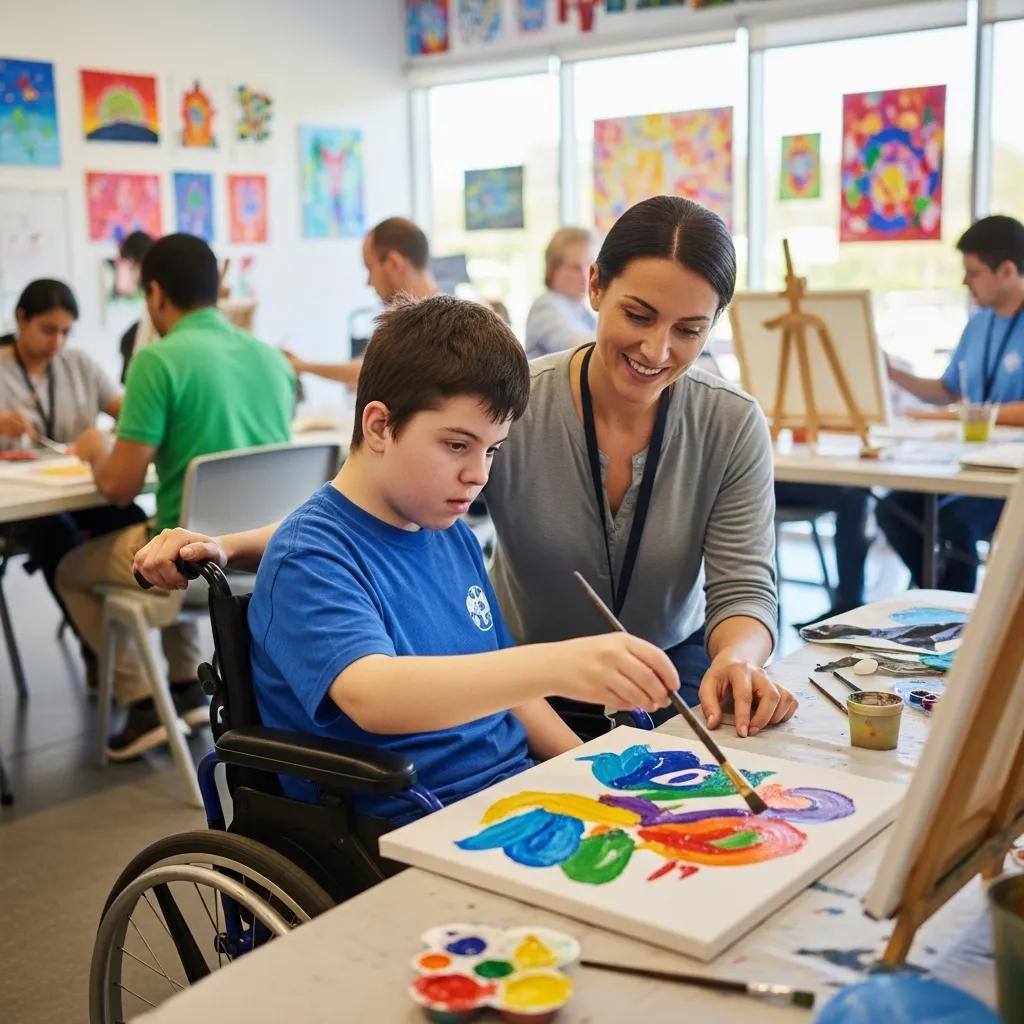
Examples of community access illustrate how supports are delivered and why they matter. For instance, attending an arts workshop with a support worker can build fine motor and communication skills while reducing isolation; joining a peer-led social club can create networks that lead to informal employment opportunities or volunteer roles. These scenarios show how participation funding can be goal-directed and measurable.
Defining NDIS Community Access and Social Inclusion Support
NDIS community access is intended to help participants engage in social, recreational and economic activities with appropriate supports that enable independence and skill development. The mechanism is typically a combination of direct support worker assistance, transport funding where required and capacity-building interventions to build skills for independent participation. This scope excludes primarily clinical or medical interventions but can coexist with allied health supports when skill development is needed to achieve participation goals. Short example scenarios include supported attendance at a community centre, transport to a sports program, or coordinated volunteer placements that build work-readiness.
Community access is distinct because the primary outcome is participation rather than clinical improvement; this distinction helps when allocating funding between Core supports and Capacity Building. Understanding the scope of these supports prepares participants to frame goals clearly in plan meetings and to request appropriate funding.
How Community Participation Enhances Well-being and Independence
Community participation enhances wellbeing by increasing social connection, reducing isolation and improving mental health through regular engagement in meaningful activities. The mechanism is social reinforcement combined with repeated practice of skills, as participants join groups and activities, confidence and competence grow, which in turn increases autonomy. Evidence and contemporary research indicate that social inclusion correlates with lower rates of depression and better quality of life outcomes for people with disability. For example, participants who attend peer support groups regularly often report improved mood and greater willingness to try new activities.
These wellbeing outcomes feed directly into independence: as social and practical skills improve, participants require less intensive support and can pursue broader community roles such as volunteering or part-time work. The next section explains how to access the funding that makes these outcomes possible under the NDIS.
How Can You Access NDIS Community Funding for Social and Community Activities?
Accessing NDIS funding for community participation involves checking eligibility, preparing evidence, aligning goals with NDIS categories and requesting support at planning or review meetings. The mechanism is a clear process: demonstrate that participation supports are reasonable and necessary for achieving meaningful goals, present supporting documentation, and request specific budget items in Core or Capacity Building. Successful requests often include measurable goals, suggested hours or service types, and relevant clinician or support worker reports. This section outlines steps, eligibility criteria and practical tips to present a convincing case.
However, the effectiveness of NDIS funding in achieving these outcomes, and the challenges some participants face, remain critical areas of discussion.
NDIS Funding, Choice, and Community Involvement Outcomes
Some NDIS participants are receiving increased disability support funding, the necessary support to choose how to use it, and they are achieving positive outcomes and increased community involvement. Others are missing out. The NDIS is facing many logistical challenge
Choice, control and individual funding: The Australian national disability insurance scheme, C Laragy, 2020
Eligibility for community participation funding depends on participant status under the NDIS and whether the requested supports are reasonable and necessary to achieve plan goals. Gather clinical reports, goal statements and examples of how participation will improve daily functioning. It is useful to prepare clear statements on the expected outcome and timeframe, and to show alternatives if the funding is not provided.
- Check your NDIS plan and goals: Confirm current goals and existing supports that could be reallocated for participation.
- Gather evidence: Include clinician letters, allied health assessments and examples of similar supports that achieved outcomes.
- Request a plan review or include in next planning meeting: Clearly state the desired supports, hours and expected outcomes.
- Propose measurable goals: Use specific outcome statements like “attend community arts group weekly with fading support within 12 months.”
- Follow up and document outcomes: Keep records of participation and progress for future reviews.
Eligibility Criteria for NDIS Community Participation Support
Eligibility for community participation support requires NDIS participant status and that the requested supports are reasonable and necessary to help meet goals in the plan. Key evidence includes allied health reports, behavioural assessments if relevant, and statements from support workers or community organisations outlining the activity and support needed. You should be ready to explain why mainstream services are insufficient and how NDIS-funded supports will deliver measurable outcomes. Common situations where funding is appropriate include skill-building for social interaction, supported transport to enable participation and personalised assistance to attend community activities.
When funding may not be appropriate is also important: purely recreational hobbies without skill or participation goals, or activities that are better funded by mainstream services, may not meet NDIS criteria. Preparing clear outcome measures and linking activities to independence increases the likelihood of approval.
Step-by-Step Guide to Applying for NDIS Community Access Funding
A practical, numbered approach helps secure community participation funding. Begin by mapping participation goals to NDIS outcomes and identifying required supports and likely hours. Next, collect supporting evidence such as OT or psychologist reports and statements from community groups confirming the availability of an inclusive program. Request the funding at a plan meeting with a clear proposal that specifies whether supporters should sit in Core (assistance with social activities/transport) or Capacity Building (skill development, social skills training). After approval, implement the support and document progress to support future reviews.
- Map goals: Translate desired participation outcomes into measurable NDIS goals.
- Collect evidence: Obtain allied health reports and provider confirmations.
- Propose budget items: Specify supports, hours and whether Core or Capacity Building applies.
- Attend plan meeting: Present the proposal and negotiate wording.
- Implement support and report: Track attendance and progress for reviews.
Careful preparation and quantifiable goals improve success rates; the following section details the types of activities commonly funded and how they fit into funding categories.
What Types of Disability Community Activities are Funded by NDIS?
NDIS funds a broad range of community activities that support participation and skill development, typically including social clubs, adaptive sports, arts workshops, volunteering and community courses. The mechanism is funding for support and capacity building that directly enable participation and independence, either by paying for support worker assistance, transport or training. Recognising which activities fit Core or Capacity Building helps you request the right budget category and justify the funding. Below is a quick comparison to show how activities typically align with funding categories and what NDIS may cover.
Core Support vs Capacity Building: Understanding Funding Categories
Core support for participation typically covers everyday assistance to attend activities, such as support worker time and transport, with the focus on enabling access. Capacity Building supports, in contrast, fund skill development like social skills training, community access training, or allied health that improves a participant’s ability to participate independently. Deciding which category to request depends on the goal: if the aim is immediate attendance, Core is appropriate; if the aim is to learn skills to participate independently, Capacity Building is the right fit. Use measurable objectives to justify category selection during planning discussions.
Understanding this distinction helps when drafting plan proposals: specify whether you are requesting immediate assistance to access an activity or targeted training with the goal of reducing reliance on paid support over time. Clear outcome measures such as “reduce support hours by 50% in 12 months” strengthen Capacity Building requests.
Examples of Funded Activities: Sports, Arts, Social Clubs, and More
Concrete examples help you visualise funded community activities and what the NDIS may cover. Adaptive sports programs often include support worker assistance and equipment hire to participate safely. Arts workshops might involve support for attendance and specialist instructors to build fine motor and communication skills. Social clubs frequently receive Core funding for staff-assisted outings, while volunteering placements can be structured as Capacity Building to develop work skills. Other examples include supported courses at community colleges, cooking classes that build daily living skills, and peer support groups that reduce isolation.
- Adaptive sports: Support worker, transport, equipment.
- Arts and creative programs: Tuition, support worker assistance.
- Social clubs and peer groups: Staff-assisted participation and coordination.
- Volunteering and supported placements: Coaching, supervised practice, transport.
Short case examples of community programs in practice can help plan discussions by showing realistic outcomes and supports a provider can deliver.
How to Find Local Disability Support Groups and Community Resources in Australia?
Finding local disability support groups and community resources involves contacting Local Area Coordinators (LACs), searching national and state directories, and contacting community centres and disability organisations in your region. The mechanism is mapping available resources to participant goals and assessing accessibility, transport options and program suitability. Practical steps include preparing information about the participant’s needs, identifying search filters like accessibility and age-group, and contacting organisers to confirm support availability. This section provides a resource checklist and direct strategies to locate suitable programs in Sydney, Canberra and the Central Coast.
Connecting with NDIS Partners and Local Area Coordinators
Local Area Coordinators assist participants to connect with community resources and can help navigate referrals to appropriate programs. When meeting with an LAC, bring the participant’s current goals, examples of desired activities and relevant reports or assessments that explain support needs. LACs differ from support coordinators in that they focus on linking to mainstream and community options and can provide referrals or information about local inclusive providers. Be clear about transport needs, accessibility requirements and any behavioural supports to ensure the LAC can identify suitable options.
As part of preparation, request a list of local providers and ask the LAC to note programs that have experience with similar support needs. This will make follow-up calls and site visits more productive.
Using Online Platforms and Directories for Accessible Community Programs
Online platforms and directories make it easier to search widely for accessible community programs but require careful filtering and verification. Use search filters for accessibility, participant age-group and transport options and review program descriptions for inclusion statements and staff qualifications. Contact organisers directly to confirm support worker ratios, accessible facilities and cost structures before enrolling. Helpful platforms include national inclusive recreation directories, state disability networks and local council activity listings; when researching, note how each program documents accessibility and whether peer support is available.
Tips for verification:
- Ask about staff training and experience with participants with similar needs.
- Confirm transport options and pick-up arrangements.
- Request a trial session when possible to assess fit.
Summarise findings and document which programs meet key accessibility and inclusion criteria before making a funding request or arranging supports.
What Role Do Support Workers Play in Facilitating NDIS Community Participation?
Support workers enable community participation by providing personalised assistance, transport, and skill scaffolding so participants can join activities safely and meaningfully. The mechanism is direct support that reduces barriers to access while practising skills that increase independence over time. Core tasks include planning outings, accompanying participants to programs, providing prompts for social interaction and conducting risk assessments to ensure safety. High-quality support workers often have training in communication strategies, behaviour support (when needed) and knowledge of community resources.
Support workers also act as a bridge between participants and community organisations, advocating for reasonable adjustments and helping participants build confidence. The next subsections detail transport and personalised assistance roles and the ways support workers scaffold skill development to increase independence.
Personalised Assistance and Transport Support for Participants
Transport and personalised assistance are common ways support workers enable participation, and these supports can be funded when they are reasonable and necessary to achieve participation goals. Transport options include driver assistance, support during public transport trips and arranged accessible transport for group activities. Planning transport involves assessing mobility needs, scheduling accessible routes, and arranging pick-up/drop-off details with providers. Safety considerations such as medication management, mobility supports and venue accessibility checks should be documented and discussed with the participant and family.
Well-planned transport and personalised assistance reduce the risk of missed opportunities and enable consistent participation that leads to measurable skill development and social outcomes.
Building Skills and Confidence Through Community Engagement
Support workers use scaffolding techniques to build skills and confidence: breaking tasks into manageable steps, modelling social interactions, and gradually fading prompts as competence grows. Practical examples include role-playing conversations before a social event, practicing public transport routes, and using stepwise independence goals such as attending with a support worker, then with minimal prompts. Progress is measured through observable outcomes like increased unsupervised attendance or improved communication during group activities. Support workers also coordinate with allied health professionals to incorporate therapeutic strategies into real-world settings.
These approaches create sustainable behavioural change and increase the likelihood that participants will continue participating with reduced paid support over time. Ability to Achieve provides trained support workers who specialise in community access and can assist with planning and booking support for activities in Sydney, Canberra and the Central Coast, supporting participants to translate plan goals into real-world outcomes.
How Can Families and Care Providers Support NDIS Participants in Community Access?
Families and care providers play a crucial role in encouraging participation, advocating at plan meetings and providing scaffolded support that complements funded services. The mechanism involves combining everyday encouragement, practical planning and advocacy to ensure support is in place and used effectively. Families can prepare participants for activities, practise social scenarios at home and liaise with providers to ensure reasonable adjustments. Understanding where carers fit within NDIS planning helps families know when to request carer-specific support or respite as part of broader participation goals.
Practical strategies include scripting conversation starters, scheduling gradual exposure to new settings and coordinating with allied health to integrate skill-building into community activities. The following subsection summarises key NDIS guidance for carers and outlines resources and strategies to encourage participation.
Understanding NDIS Guidelines for Carers and Support Networks
NDIS guidance for carers clarifies roles in planning and the distinction between unpaid carer responsibilities and funded provider duties. Families should document the informal supports they provide and identify where paid supports would enable greater independence for the participant. When requesting funding, explain how funded supports will reduce reliance on unpaid carers and lead to measurable outcomes. Bring carer observations and logs to plan meetings as evidence of need and progress. Understanding these boundaries supports clearer plan proposals and appropriate allocations of Core or Capacity Building funding.
This clarity helps families advocate effectively during plan negotiations and ensures that supports target participant outcomes rather than substituting for unpaid care.
Resources and Strategies to Encourage Social Inclusion and Participation
Families can use practical strategies to build participation incrementally: start with short, predictable activities; use social scripts and role-play; and celebrate small successes to build motivation. Allied health professionals can recommend specific exercises and community resources that match developmental goals. Suggested local program types include peer support groups, tailored youth programs and household assistance combined with community outings. Regular review and documentation of progress supports future plan adjustments.
For families seeking provider support to implement community participation plans, Ability to Achieve offers Community Access services, including social clubs and community programs, delivered with a person-centred approach and cultural awareness across Sydney, Canberra and the Central Coast. This provider support can assist with aligning your NDIS plan goals to practical activities and sourcing trained support workers to facilitate participation.
Families should prioritise programs that offer gradual exposure, clear accessibility information and measurable objectives to ensure sustained engagement and improved independence.