
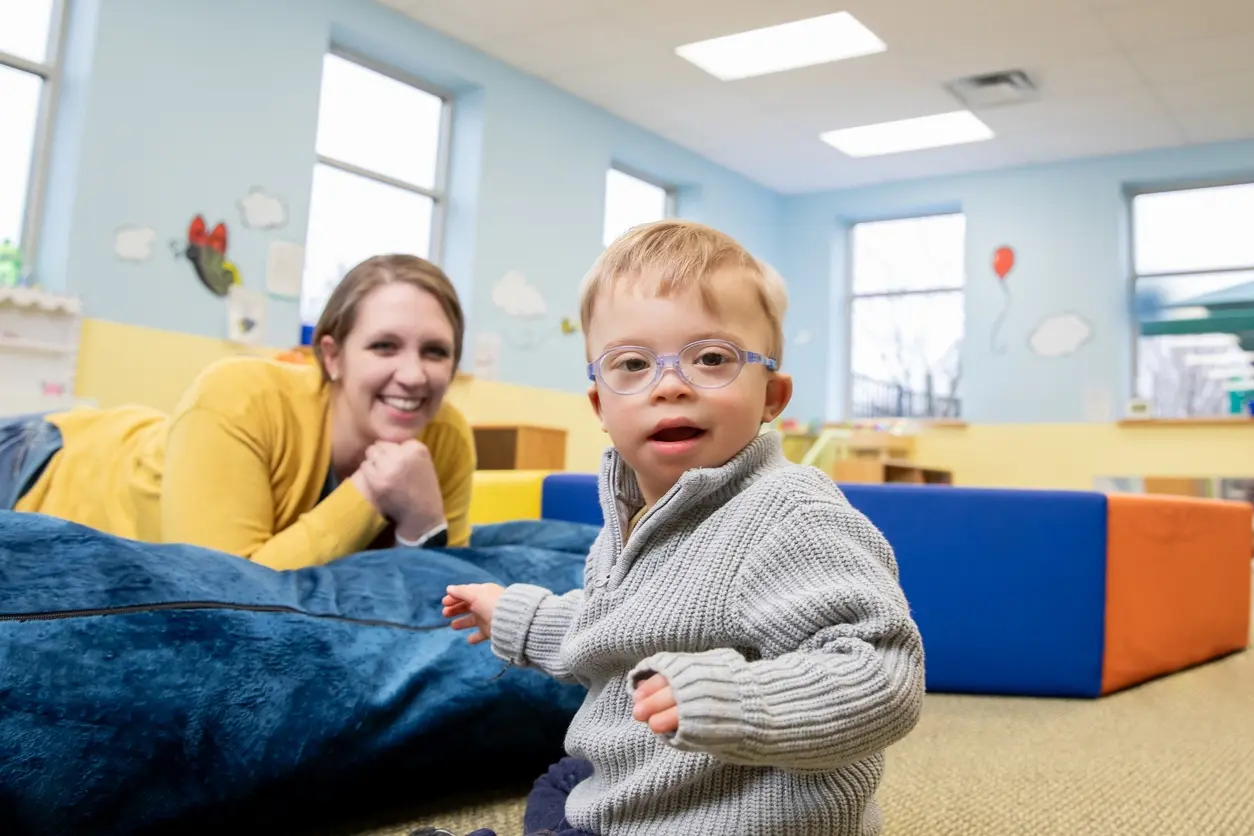
Most parents have felt it: a quiet worry that something is a little different, a moment at a playgroup where you notice your child isn’t doing what the other kids are doing, or a comment from a childcare worker that stays with you on the drive home. The instinct to wait and see is natural. Children develop at their own pace, and nobody wants to overreact.
But research is clear that earlier support produces better outcomes. The brain is at its most adaptable in the first five years of life, and therapy during this window can change a child’s developmental trajectory in ways that become significantly harder to achieve later on.
The real question isn’t whether your concern is “serious enough.” It’s whether acting sooner will give your child a better start. In almost every case, the answer is yes.
This guide walks through the key signs to watch for across speech, motor skills, behaviour, and social development, and explains exactly what to do if you’re concerned.
What Is Early Intervention, and Why Does Timing Matter?
Early intervention refers to therapies and support services designed for children aged 0 to 6 who have a developmental delay, disability, or condition that affects how they learn, communicate, move, or interact with others. In Australia, these services typically include speech therapy, occupational therapy, physiotherapy, behaviour support, and specialised early childhood education.
The reason timing is so critical comes down to neuroscience. The first five years of life represent a period of extraordinary brain plasticity, when neural connections form at a rate that will never be repeated. Research published by the Australian Institute of Health and Welfare confirms that interventions delivered during this window produce significantly better long-term outcomes than equivalent support provided in middle childhood or adolescence.
Key takeaway: Early intervention isn’t about labelling your child. It’s about giving their brain the right kind of input at the moment it’s most receptive.
In Australia, children with a confirmed diagnosis or developmental delay may be eligible for funding through the NDIS Early Childhood Approach, which provides access to support for children under 9 without requiring a formal diagnosis. This means you do not need to wait for a diagnosis to start getting help.
Signs Your Child May Benefit from Early Intervention
Developmental delays can appear across several areas. Some children show signs in one domain only; others show a broader pattern. The following is not a diagnostic checklist, but a practical guide to help you recognise when professional assessment is worth pursuing.
Speech and Language
Speech delays are the most common reason Australian families seek early intervention. Consider speaking with a professional if your child:
- Has not said any words by 12 months
- Is not combining two words by 24 months (e.g. “more milk,” “daddy go”)
- Has speech that is very difficult to understand by age 3
- Has lost language skills they previously had at any age
- Rarely initiates conversation or responds when their name is called
The Raising Children Network, Australia’s trusted parenting resource, provides age-by-age speech milestones that can help you benchmark where your child sits.
Motor Skills
Motor delays can affect either gross motor skills (walking, jumping, balance) or fine motor skills (holding a pencil, doing up buttons, using cutlery). Signs worth noting include:
- Not sitting independently by 9 months
- Not walking by 18 months
- Consistently falling or appearing uncoordinated for their age
- Difficulty with tasks like drawing, cutting, or self-care activities that peers manage easily
- Avoiding physical play or tiring unusually quickly
Social and Emotional Development
This area is often the hardest for parents to name, because it can look like shyness, sensitivity, or strong-willed behaviour. Signs that may indicate a need for support include:
- Limited eye contact or difficulty reading facial expressions
- Preferring to play alone consistently, with little interest in other children
- Intense, prolonged meltdowns that are difficult to de-escalate
- Rigid routines, with significant distress when things change
- Difficulty understanding or following social cues
Behaviour and Attention
- Significant hyperactivity or impulsivity compared to same-age peers
- Extreme difficulty transitioning between activities
- Persistent aggression, self-harm, or unsafe behaviours
- Very short attention span that affects learning and daily routines
One important note: a single sign in isolation rarely tells the whole story. What matters is the pattern, the frequency, and whether the behaviour is affecting your child’s daily life and learning.
The “Wait and See” Trap
One of the most common pieces of advice parents receive is to wait and see. It’s well-intentioned, but it’s also the advice most likely to cost your child valuable time.
Children do develop at different rates, and some delays do resolve on their own. But here’s the reality: a professional assessment doesn’t commit you to anything. It simply tells you where your child is right now, and whether support would help. If the answer is no, you’ve lost nothing. If the answer is yes, you’ve gained months or years of the most effective intervention window available.
The cost of waiting is asymmetric. If you act early and your child doesn’t need help, you’ve spent some time on assessment. If you wait and your child did need help, you’ve lost a period of brain development that cannot be recovered.
There are a few situations where acting quickly is especially important, rather than monitoring:
- Your child has lost a skill they previously had (regression is always worth investigating promptly)
- Multiple areas of development are affected at the same time
- Your child’s difficulty is affecting their ability to participate in daily life, childcare, or family routines
- You’ve raised concerns before and been told to wait, but nothing has changed
What to Do If You’re Concerned: A Practical Next Step
If anything in this article has resonated, here’s a clear path forward. You don’t need a formal diagnosis to start.
Step 1: Talk to Your GP or Child Health Nurse
Your first port of call is your GP or local child and family health nurse. Describe what you’ve observed in specific terms: what your child does, how often, and how it compares to what you’d expect. Ask for a referral to a speech pathologist, occupational therapist, or paediatrician depending on your concern. GPs can also issue a Chronic Disease Management Plan (formerly Enhanced Primary Care Plan), which provides Medicare rebates for up to five allied health sessions per year.
Step 2: Contact an Early Childhood Partner
In NSW, families can also contact an NDIS Early Childhood Partner directly, without a GP referral. These are organisations funded by the NDIS to provide early support and help families access the right services. They can assess your child and connect you with funded therapy, often without a formal diagnosis being required first.
Step 3: Reach Out to a Registered NDIS Provider
If your child is already receiving NDIS funding, or you believe they may be eligible, a registered NDIS provider can offer a range of therapies under one roof. Look for a provider that offers speech therapy, occupational therapy, and behaviour support together, so your child’s care is coordinated rather than fragmented.
| Concern | Who to Contact First |
|---|---|
| Speech or language delay | GP or speech pathologist directly |
| Motor skills (gross or fine) | GP or occupational therapist |
| Social, emotional, or behavioural | GP or paediatrician |
| Unsure where to start | NDIS Early Childhood Partner |
| Child already has NDIS funding | Registered NDIS provider |
You do not need to have everything figured out before you make a call. A good provider will help you work through the next steps.
How Early Intervention Actually Works
Parents sometimes worry that early intervention will be clinical, stressful, or disruptive for their child. In practice, it’s usually the opposite. For young children especially, therapy is designed to look and feel like play.
A speech therapist working with a two-year-old isn’t drilling vocabulary flashcards. They’re playing with bubbles, building towers, and narrating actions in ways that build language naturally. An occupational therapist helping a child with sensory processing might use swings, sand trays, and obstacle courses to build the nervous system’s tolerance and integration.
The goals are practical and family-centred. Good early intervention doesn’t just work with your child in a clinic room; it equips you as a parent with strategies to support development throughout the day, at home, at mealtimes, and during play.
What Therapies Are Typically Involved?
- Speech pathology: Communication, language development, feeding, and social communication
- Occupational therapy: Fine motor skills, sensory processing, self-care, and play skills
- Physiotherapy: Gross motor development, balance, coordination, and movement
- Behaviour support: Understanding and responding to challenging behaviours, building positive routines
- Psychology: Emotional regulation, anxiety, and social-emotional development
Many children benefit from a combination of therapies, particularly when delays span more than one area. A coordinated approach, where therapists communicate with each other and with your child’s educators, produces the best outcomes.
Trust Your Instincts
Parents are often the first to notice that something is different, before teachers, before health professionals, before anyone else. That instinct is worth taking seriously.
You don’t need to arrive at an appointment with a diagnosis in hand, or a perfectly articulated description of the problem. You just need to show up and say: “I’ve noticed this, and I’m not sure what to make of it.” A good clinician will take it from there.
Early intervention works best when it starts early. If you’re reading this and something has been sitting at the back of your mind, this is your signal to act on it now rather than next term, or next year.
Ability to Achieve provides early intervention and allied health services across Sydney, the Central Coast, and Canberra. Our team includes speech pathologists, occupational therapists, and behaviour support practitioners who work with children and their families from the earliest signs of delay. Get in touch with our team to talk through your child’s needs, with no obligation and no diagnosis required.